



The 4 Pillars of SMETA: What North American Companies Need to Know to Compete Globally
Supply chain expectations are changing fast. New ESG regulations, rising consumer scrutiny, and stricter buyer requirements mean companies must prove they operate responsibly from top to bottom. More than 65,000 businesses in over 180 countries now use SMETA audits to demonstrate responsible labor practices, environmental stewardship, and business integrity. While often associated with overseas manufacturing, SMETA is now a growing requirement for U.S. and Canadian companies.
Whether you supply a global retailer, a European food processor, or a domestic buyer with strict ESG policies, understanding SMETA’s four pillars can help you meet expectations, reduce risk, and stand out in a crowded marketplace.
In our first article, we introduced SMETA and explained why it is a global benchmark for responsible supply chain practices. In this article, we take a closer look at each of its four pillars, explain their relevance for North American companies, and share practical tips supported by real-world examples.
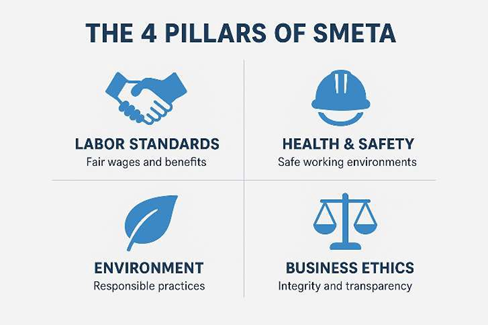
Why the 4 Pillars Matter for North American Companies
European and global buyers are under increasing pressure from regulators and consumers to ensure their supply chains are ethical, safe, and sustainable. For them, SMETA is a single, credible framework to assess suppliers across multiple dimensions. It is not just a compliance checkbox. It is a key procurement filter.
For North American companies, understanding these pillars means:
- Reducing the risk of losing opportunities due to non-compliance
- Aligning with global ESG trends and corporate responsibility benchmarks
- Winning more tenders by meeting, and ideally exceeding, buyer expectations
Let’s begin with the first pillar, which addresses how a company treats its workforce and those in its supply chain.
Pillar 1: Labor Standards
What SMETA Covers:
- Fair wages and benefits
- Reasonable working hours
- Prohibition of forced, bonded, or child labor
- Respect for freedom of association and the right to collective bargaining
North American Context:
U.S. and Canadian labor laws are strong, but SMETA requires documented evidence of compliance, processes for addressing worker grievances, and due diligence across your supplier network.
Real-World Example:
McDonald’s and Unilever have integrated the SMETA 7.0 standard into their global compliance frameworks, leveraging its structured, four-pillar audits to improve supplier transparency and reduce duplicated audit processes. SMETA 7.0’s Management Systems Assessment encourages proactive risk management, not just compliance
Why it matters: Smaller suppliers report that adopting SMETA makes them more competitive, helping them demonstrate social compliance credibility and increasing their chances of winning new business
Practical Tips:
- Maintain updated records of wages, hours, and benefits
- Implement a clear worker grievance policy and train staff on its use
- Include labor compliance clauses in all supplier contracts
Strong labor practices must be matched by a safe and healthy working environment, which brings us to the second pillar.
Pillar 2: Health and Safety
What SMETA Covers:
- Identification of workplace hazards
- Regular safety inspections and maintenance
- Emergency preparedness and response plans
- Health and safety training for all employees
North American Context:
Meeting OSHA or Canadian OHS requirements is essential but may not be enough. SMETA auditors look for a proactive safety culture. They want evidence that safety is embedded in daily operations and that employees at all levels are engaged in safety practices.
Real-World Example:
Clipper Logistics had SMETA audits conducted across their operations and associated labor agencies. This led to improved governance over contingent workforce practices and introduced an independent, 24/7 employee helpline, serving as an early-warning system for potential incidents.
Why it matters: Clipper’s investment in audit transparency and employee voice has enhanced alignment with supplier expectations and strengthened internal and external trust in their ethical practices.
Practical Tips:
- Document all safety training sessions, including attendance and topics covered
- Conduct regular risk assessments and keep action logs for hazards identified
- Ensure contractors and temporary workers are included in safety programs
Beyond the workforce, SMETA also looks at how a company manages its impact on the planet, forming the third pillar.
Pillar 3: Environment
What SMETA Covers:
- Environmental management systems
- Monitoring and reducing energy, water, and waste
- Compliance with environmental laws and permits
- Commitment to continuous environmental improvement
North American Context:
Even companies in low-impact sectors are expected to demonstrate environmental responsibility. For exporters, this aligns with global ESG priorities and European Union initiatives such as the EU Green Deal.
Real-World Example (Perrigo and Global Packaging):
Large organizations like Perrigo and Global Packaging are actively using SMETA criteria within their supplier assessments to streamline sustainable practices. They benefit from consistent metrics, such as energy consumption and waste reduction, across global suppliers, facilitating benchmarking and transparency.
Why it matters: The adoption of SMETA’s environmental pillar enables companies to demonstrate continual improvement and meet rising ESG expectations more effectively.
Practical Tips:
- Track energy, water, and waste metrics consistently
- Set annual reduction targets and document progress
- Train staff on environmental best practices such as waste segregation and energy efficiency
Finally, SMETA examines how businesses conduct themselves with integrity and transparency, the focus of the fourth pillar.
Pillar 4: Business Ethics
What SMETA Covers:
- Anti-bribery and anti-corruption measures
- Transparent and accurate business records
- Ethical sourcing and fair competition
- Prevention of conflicts of interest
North American Context:
Global buyers operate under strict anti-corruption frameworks such as the UK Bribery Act, the U.S. Foreign Corrupt Practices Act, and EU directives. Demonstrating strong business ethics can be the deciding factor in a competitive bid.
Real-World Example (McDonald’s Transition to SMETA 7.0)
Beginning in 2025, McDonald’s will require all its suppliers to undergo the SMETA 4-pillar audit based on the 7.0 version. This new requirement includes tighter standards on working hours (max 60 hours/week), minimum working age (now 15+), anti-bribery, emergency preparedness, and clearer human rights expectations, all enhancing ethical oversight throughout the global supply base.
Why it matters: This move not only streamlines audit expectations for suppliers but reinforces ethical and transparent business standards on a global scale.
Practical Tips:
- Implement a formal Code of Ethics that covers bribery, fraud, and fair competition
- Require suppliers to sign compliance declarations annually
- Include ethics training in onboarding for all employees
Understanding the four pillars is only the start; the real value comes from how companies apply them in everyday operations.
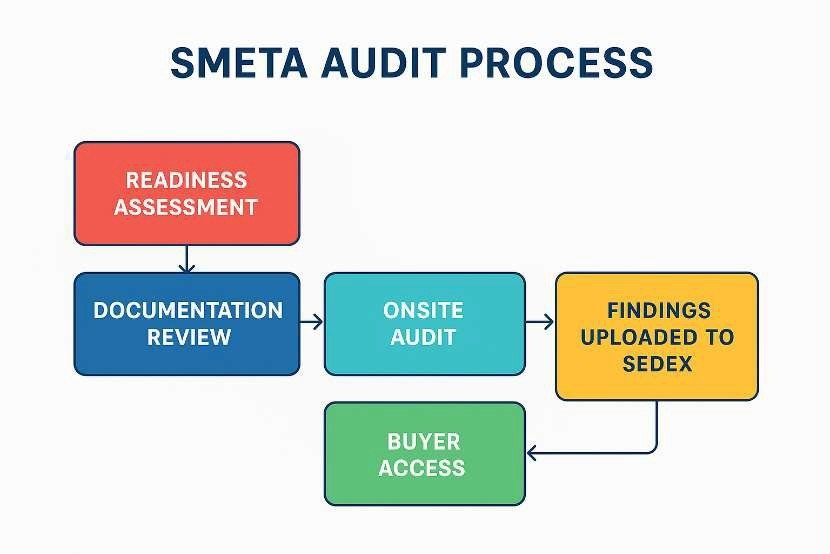
How EUROCERT USA Can Help
EuroCert USA supports North American manufacturers, processors, and logistics providers in preparing for and passing SMETA audits. Our approach includes:
- Readiness assessments to identify and close compliance gaps before the audit
- Documentation reviews to ensure auditor expectations are met
- Onsite and remote support during the audit process
- Post-audit action plans to address findings and maintain compliance for future buyer requests
Contact EuroCert USA today to schedule a SMETA readiness consultation. We will help you identify compliance gaps, prepare documentation, and position your business to succeed in both domestic and international supply chains.
Contact Us
For a personalized consultation on how Eurocert can support your SMETA readiness or ESG compliance strategy, please contact Patrick Mullen directly:
Phone: +1 (732) 570-8631
Email: [email protected]
Whether you're preparing for your first audit or looking to strengthen compliance across your supply chain, I'm here to help you navigate the process with confidence.
Final Takeaway
Whether your company is looking to expand into European markets, operate within multinational supply chains, or simply strengthen your position at home, the four pillars of SMETA offer more than compliance. They provide a proven framework for building safer workplaces, more ethical business practices, and stronger environmental stewardship, helping you earn trust and long-term loyalty from customers, partners, and employees alike.
Next in the series, we will cover how to prepare for a SMETA audit, including timelines, documentation, common pitfalls, and how to make the process smooth and stress-free.